


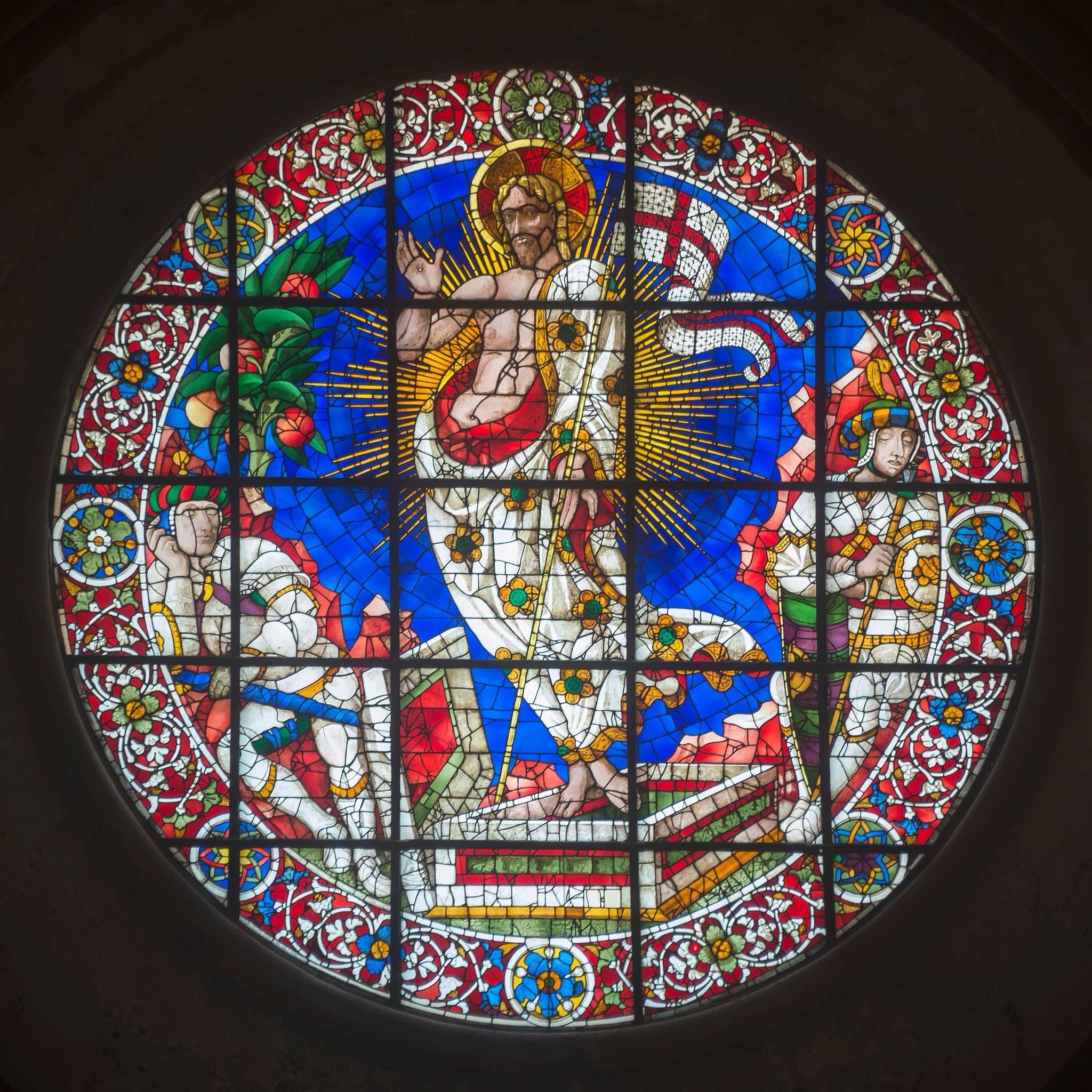
Standing beneath the stained glass windows of the Duomo in Florence, I was struck by a simple truth.
Each masterpiece is made from hundreds of individual pieces of glass. On their own, the fragments seem insignificant. Some are jagged. Some are dark. Some appear flawed. Yet when they are assembled by the hands of a master craftsman and illuminated by light, they tell a story far greater than the sum of their parts.
It made me think about our own lives.
Most of us spend years trying to hide the broken pieces.
The failures.
The disappointments.
The betrayals.
The grief.
The addictions.
The doubts.
The seasons when life did not unfold according to plan.
We often view these experiences as interruptions to our purpose when, in reality, they are often the very path to discovering it. I’ve come to believe that purpose is rarely found in our strengths alone. More often, purpose emerges from our wounds.
The entrepreneur who struggles through failure learns resilience and wisdom that no textbook can teach.
The partner who fights through hardship discovers a deeper capacity for love and grace.
The person who walks through loss gains empathy that becomes a gift to others.
The recovering alcoholic learns that vulnerability can become a source of strength rather than shame.
Our pain is not always the obstacle, it is the invitation.
This truth is reflected throughout Scripture. Moses carried the burden of self-doubt. David endured failure and brokenness. Peter experienced public failure. Paul lived with a thorn he never fully escaped. Thomas was full of doubt. The woman at the well full of shame.
Yet God consistently used the places of struggle to reveal purpose.
Not despite the pain, instead through the pain to transformation to purpose.
The same principle applies in business.
The leaders who create meaningful cultures are rarely those who have experienced uninterrupted success. They are the ones who have navigated setbacks, disappointments, and moments when they questioned themselves. Their scars become wisdom. Their struggles become perspective. Their failures become leadership lessons.
The same principle applies in relationships.
The strongest relationships are not those that avoid conflict. They are the ones that learn how to move through conflict with honesty, humility, forgiveness, and grace.
And perhaps nowhere is this message more important today than in how we define strength.
For years, many of us were taught that being strong meant being silent.
Don’t complain.
Don’t show weakness.
Don’t ask for help.
Carry the burden alone.
But strength and silence are not the same thing, and thanks to Solomon Thomas I was reminded of that a couple of weeks ago, at an unexpected moment of time when I needed to hear it and be reminded of it….again.
The Defensive Line (www.thedefensiveline.org) has helped bring this message to the forefront through a simple but powerful truth: Strong does not equal silent.
Real strength is
found in authenticity
admitting when you’re struggling
reaching out before the darkness becomes overwhelming
allowing others to walk alongside you
Silence isolates.
Connection heals.
The stained glass of the Duomo reminds us that light shines through broken places.
The message of faith reminds us that God often works through our struggles rather than around them.
The message of healthy relationships reminds us that vulnerability creates intimacy.
The message of great leadership reminds us that transparency builds trust.
And the message of The Defensive Line reminds us that strength is not the absence of struggle,,,,,it is the courage to speak honestly about it.
Your scars are not evidence that you are disqualified.
They may be evidence of where your purpose is waiting to be found.
Like stained glass, the broken pieces of your story may be exactly what allows the light to shine through, for someone who is looking for hope….and just maybe you are their stained glass window.